From time to time, I visit private jet charter brokers to see the factory floor and get reminded about how the sausage is made.
I always enjoy hearing inbound calls from folks looking to fly privately.
Generally speaking, conversations start with a desire for safety.
Then there’s a discussion of what’s needed.
Next, there are generally price questions.
And then, more times than there should be, the caller says something along the lines of the estimated jet card hourly rate or charter price being significantly more than an option already in hand.
That option is usually from a friend with a jet, or a friend of a friend with a jet.
From there, the details usually get fuzzy.
Legal, Not Legal
It’s a lease, but only for that flight.
It’s some type of trade.
They let you use their airplane.
You let them use your house at the beach.
They need you to cover the fuel and take care of the pilot.
Who owns the airplane can also be fuzzy, as in a few guys who use it together.
Details on the pilots are often a bit hazy as well.
Sometimes it’s unclear whether there is one or two pilots, maybe two pilots, but not sure.
You may ask, what’s the difference, besides the price?
It could be that your friend with a jet operates their airplane under Part 91 rules from the Federal Aviation Administration.
That enables them to use it for non-commercial use.
Trading the use of your condo for flights would qualify for commercial use.
Beyond that, it’s important to understand that charter flights are subject to the rules in Part 135.
For an operator to hold a Part 135 certification from the issuing authority, in the U.S., the Federal Aviation Administration, it is both time-consuming and expensive.
Part 135 is also much more stringently regulated than Part 91 operations.
That includes requirements for aircraft maintenance, pilot qualifications, how long pilots can fly before needing a break, the required length of that break, required training, insurance, and more.
What’s more, it’s not just the operator.
Each airplane they make available must be on what’s called a D-085.
That includes a process that can take weeks to months, called conformance, and can also be expensive, as it involves auditing past maintenance records.
Why It Matters
Part 135 – and Part 91K, the certification of fractional operators, have much more stringent regulations governing operators than Part 91.
The Part 91 rules govern a person or company that owns and operates their aircraft for non-commercial use.
Writing in Business Jet Traveler, comparing the different standards, Jeff Wieand explains, “Under Part 91, your caffeine-swilling pilots can fly your aircraft around for days without ever taking a break. Part 135 (and Part 91 subpart K, which applies to fractional programs), on the other hand, has specific flight-duty-time and rest requirements.”
The more stringent Part 135 and 91K rules extend to drug and alcohol testing, maintenance, training, pilot experience, required runway length, insurance, liability, operational control, and more.
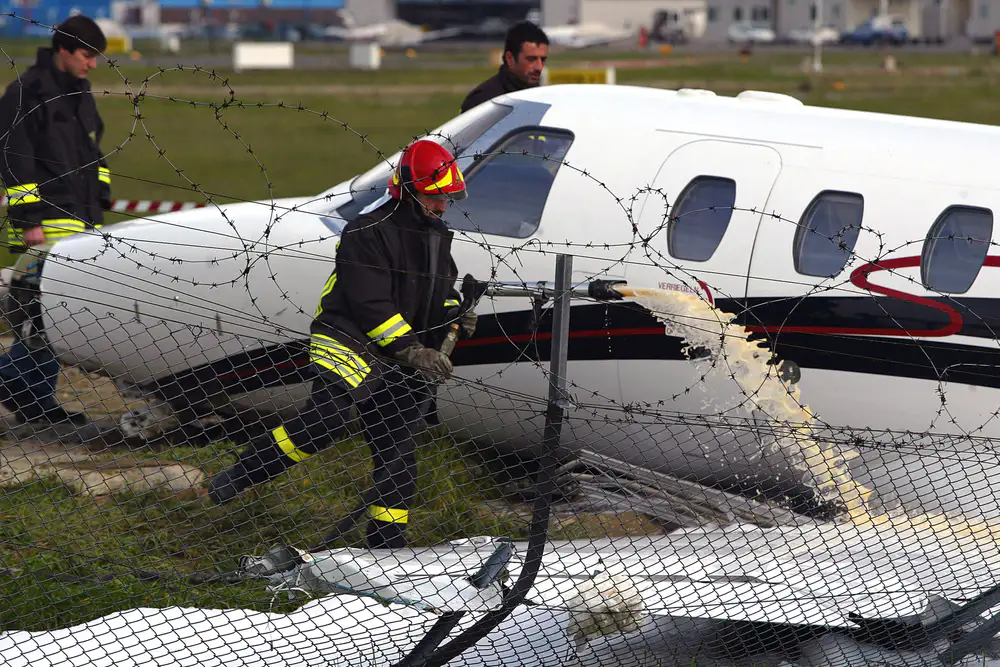
Illegal charter – selling flights operated by aircraft not on the list – is considered a major safety issue.
In fact, the FAA issued a warning to consumers about illegal charter flights before the recent Super Bowl.
It cited the high-profile death of soccer star Emiliano Sala in 2019.
On its website, the FAA outlines nearly two dozen enforcement actions it has initiated against individuals and companies for alleged illegal charter operations since 2019.
READ: Cheap illegal charter, jet sharing has safety, liability risks for flyers
Fatal Accidents
An Aviation International News analysis found that between 2010 and 2020, there were no fatal accidents involving U.S.-registered private jets operating under Part 91K (fractional operators), and just three involving Part 135 operations.
By contrast, Part 91 operations accounted for 31 fatal accidents over the 10 years.
The death of former NASCAR driver Greg Biffle in a December crash and the Challenger 650 that crashed in January on takeoff from Bangor, Maine, are recent examples of accidents on jets operating under Part 91 rules.
When it came to turboprops, Part 91K fractional operations again had zero fatal accidents during the decade.
U.S.-registered charter turboprops had 15 fatal accidents.
Part 91 operations accounted for 82 fatal turboprop accidents over the 10 years.
The crash that killed four people on a night approach to Steamboat Springs aboard an Epic E1000 in February was a Part 91 operation.
So was the crash in Wyoming that killed three members of the gospel group The Nelons in July 2024.
I would say that folks who want a deal should go in understanding the risks, which can include personal liability in the event of an accident.
I would also argue that you can’t compare the pricing for illegal chartering and, at the same time, speak to a charter broker or charter operator about a desire for safety.
READ: You might be running an illegal charter (and not know it)