December 20, 2025
CEO Barry Shevlin of FlyUSA says more consumers are questioning private jet flight provider financials and safety protocols.

The CEO of FlyUSA, Barry Shevlin, questions competitors’ financial stability and raises safety concerns in a press release titled “Industry consolidation raises trust concerns in private aviation.”
In the release, FlyUSA says, “The U.S. aviation industry is entering a period of heightened scrutiny fueled by a surge in commercial flight cancellations, Federal Aviation Administration’s safety enforcement actions, and mounting financial stress among large private aviation operators.”
The company adds, “With stakes so high, more people are asking how aircraft is managed, and who controls operational decision-making when conditions change.”
Shevlin goes on to say, “Private aviation isn’t a commodity business,” adding, “It’s a high-consequence industry.”
Shevlin says, “What matters most is how decisions are made under pressure, and whether those decisions are driven by aviation judgment or financial convenience.”
He continues, “Trust is earned operationally, not marketed.”
FlyUSA identifies several areas it considers worth attention.
He says private jet operators selling charter flights under FAA Part 135 authorization “vary widely in fleet size, governance structure, and safety management maturity, resulting in material differences in how operational risk is managed across the sector.”
Shevlin notes, “Only approximately 70 of the more than 1,000 charter operators in the United States operate 10 or more aircraft.”
Per the release:
‘In recent months, U.S. travelers have experienced widespread flight disruptions tied to winter storms, air traffic controller shortages, and aircraft availability constraints. At the same time, financial disclosures from several large, investor-backed private aviation companies have raised questions about sustainability, customer fund handling, and long-term operational resilience.’
Shevlin says, “Customers today are asking harder questions.”
He says customers are asking if the company is “built for longevity, not just growth.”
Shevlin points to “capital-backed operators acquiring fleets and customer lists at scale.”
“While consolidation can bring efficiencies, it also introduces new pressures, particularly when growth expectations collide with the realities of aircraft maintenance cycles, crew availability, and regulatory oversight,” Shevlin asserts.
The FlyUSA CEO adds, “Industry analysts and regulatory filings have highlighted the risks associated with operators relying on prepaid customer deposits to fund ongoing operations, a practice that has contributed to past failures in the sector and resulted in consumers losing hundreds of millions of dollars in aggregate.”
21.1% of subscribers to Private Jet Card Comparisons cited Financial Viability/Uncertainty as a reason “most impacting” their decision to seek another private aviation provider.
It ranked as the third-largest reason behind Increased Prices, Flight Delays, Changes, and Cancellations.
At the same time, 54.8% of respondents said the issue is “important, but it is very hard to know since most companies are privately held.”
27.4% said financial stability was a “critical factor.”
9.7% said they balance finances against benefits in pricing/savings, while 8.1% said provider financials don’t play a major factor.
READ: What happens to your jet card and private jet membership deposits?
Shevlin added that the jet-sharing market is another area of concern.
The websites and informal online groups mean “operators may have limited visibility into what prospective passengers were told outside the operator’s booking process.”
Also, “travelers who did not book directly can have fewer practical ways to independently vet the operator and aircraft.”
Shevlin says, “We keep bookings inside a controlled charter workflow, using our own DOT/FAA-authorized carrier or vetted Part 135 operators, so passenger manifests and disclosures don’t rely on informal third-party messaging.”
In a final critique, the release states, “While safety is often assumed in private aviation, Shevlin argues that not all operators approach it with the same rigor.”
He adds, “Licensing is just the baseline.”
FlyUSA launched as a charter broker, expanded into aircraft management, and later became a Part 135 charter operator.
Shevlin says, “What matters is how a company behaves above that line, how it trains and empowers pilots, how it handles go or no-go decisions, and how consistently those standards are applied across the fleet.”
FlyUSA recently launched a pre-owned fractional program.


Find the perfect solution for your private aviation needs
Save Time. Buy Confidently.
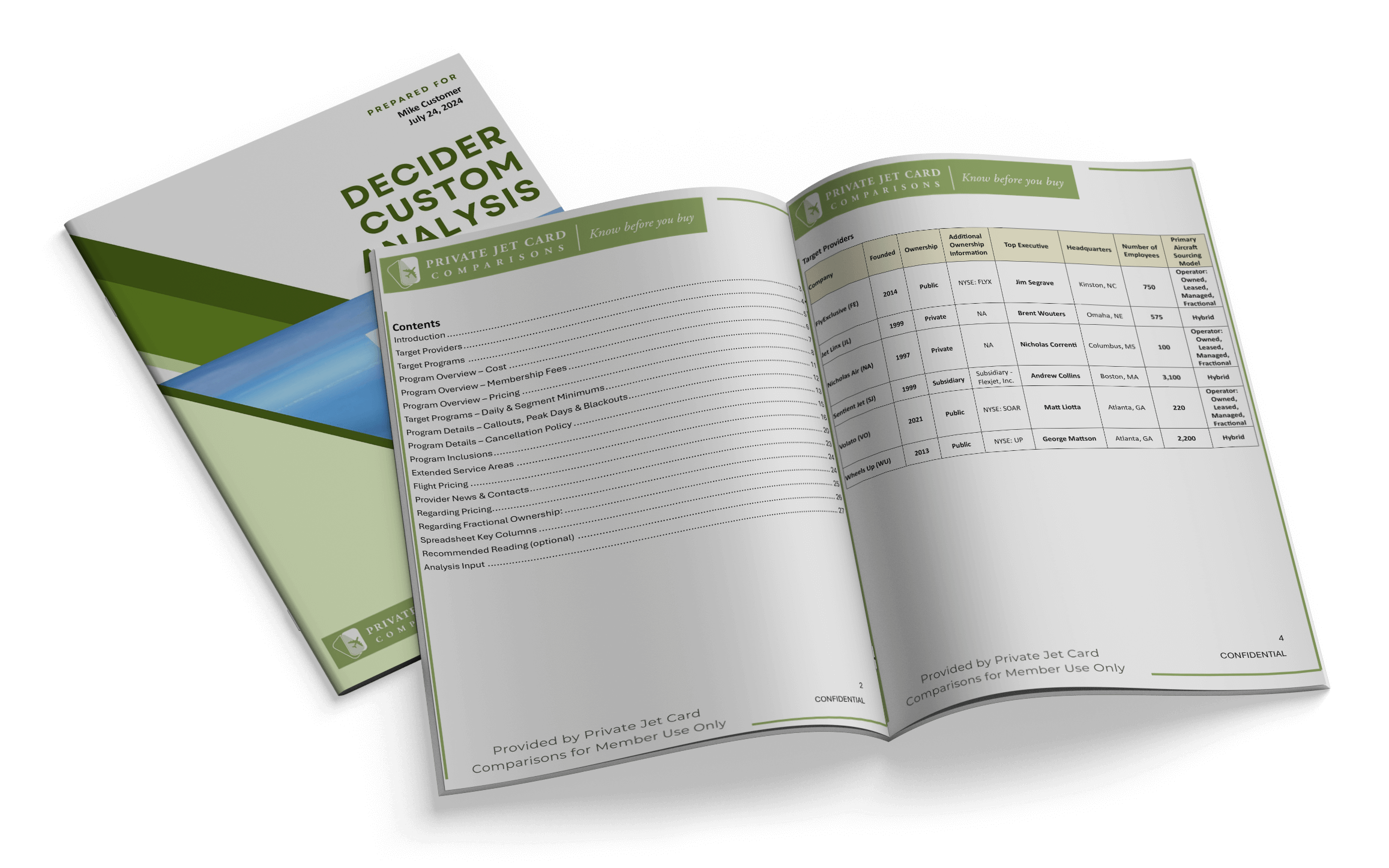
Receive an apples-to-apples comparison of programs that meet your needs from more than 500 jet card and fractional options covering 65 points of differentiation and over 40,000 data points.